The case for having dentists on your cancer care team

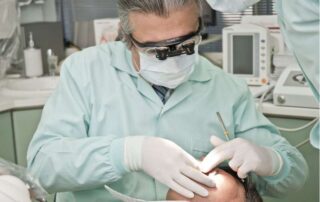
Author: New York University Source:www.medicalexpress.com Cancer treatment often takes a team of health professionals—oncologists, nurses, surgeons, radiologists, pathologists, and social workers—to coordinate and provide comprehensive support for patients. At NYU, dentists are increasingly being considered an important part of the cancer care team. When faced with a cancer diagnosis, many patients push other health care to the side to focus on addressing the disease. But people with cancer can experience unique issues related to their oral health. For instance, radiation to the head and neck can damage the salivary glands, hurting their ability to produce saliva, which can lead to tooth decay or cavities. Radiation and chemotherapy can also cause painful mouth sores. Patients with cancer that has spread to their bones, or who are undergoing treatment that can weaken their bones, may be prescribed high doses of antiresorptive medications such as bisphosphonates. These medications can cause a rare condition called osteonecrosis of the jaw, in which the jawbone is exposed through the gums. Other treatments—including chemotherapy and bone marrow transplants—lower the immune system, leaving patients susceptible to infection. Infections in the mouth during cancer treatment are especially dangerous, given the immune system's inability to fight back. "An abscessed tooth may mean having to stop chemotherapy to treat the infection," says Denise Trochesset, clinical professor and chair of the Department of Oral and Maxillofacial Pathology, Radiology and Medicine at NYU College of Dentistry. "Fortunately, intervening early to eliminate infection can minimize complications during the course of therapy," says Dalal Alhajji, [...]
2022-08-04T15:04:22-07:00August, 2022|Oral Cancer News|

I know how lobbyists make sure Americans don’t get dental care–I was one of them

Source: Fortune Date: November 19th, 2021 Author: Wendell Potter As Members of Congress continue their debate on the Build Back Better Act, it’s distressing to see House Democrats ignoring what Americans say they want most out of the legislation: adding dental coverage to Medicare. If the dental benefit isn’t put back into the bill, lawmakers will have shown once again that they listen more to two powerful trade groups in Washington–America’s Health Insurance Plans(AHIP) and the American Dental Association (ADA)–than to their constituents. As someone who has been on both sides, writing talking points for insurers and, more recently, fighting the ADA’s efforts to kill other bills to expand access to dental care, I know these organizations well. And they usually get their way. A recent Morning Consult poll found that the number one thing Americans say they want out of the reconciliation bill is Medicare dental coverage. That’s no surprise when you consider that millions of seniors lack dental coverage. Many suffer quietly with often excruciating pain caused by untreated–and often lethal–oral health disease. The main reason Medicare hasn’t covered dental care since its inception in 1965 (except when oral health problems become so severe they require hospitalization) is that organized dentistry staunchly opposed it. The dental lobby insists that any additional dental coverage should be restricted to the poorest Medicaid recipients. However, its main concern–as it was 56 years ago–is that Medicare would not reimburse dentists to their satisfaction. The ADA’s lobbyists, in essence, are placing the financial [...]

2021-12-21T12:29:10-07:00December, 2021|Oral Cancer News|

New study analyzes physical therapy for head and neck cancer survivors

Source: www.curetoday.com Author: Andrew J. Roth The aftermath of treatment for head and neck cancer can be particularly difficult, according to Ann Marie Flores. Flores, assistant professor, Department of Physical Therapy, Movement & Rehabilitation Science, Bouvé College of Health Sciences, Northeastern University, conducted a pre-pilot study looking at early physical therapy education for this patient population. CURE interviewed Flores about her poster, which she presented at the 8th Biennial Cancer Survivorship Research Conference in Washington, DC. Could you first give some background about this study? How did it come to be? It was a spinoff of some studies that I began in breast cancer. I conducted a literature review of rehab needs of breast cancer survivors about 10 years ago and found that there was very little out there. Then, when I started a rehab oncology program at a previous institution, the patient population that were referred to the program tended to not be breast cancer patients, because they physically and functionally tend to do well in aggregate. Most of my patients referred were those with head and neck cancer. I went through the same process to look through literature critically to figure out what exists in terms of physical therapy and rehabilitation-based approaches. I've updated this over a long period of time and this poster is a systematic review of the quality of evidence. I combined this literature and data review with talking to a focus group of cancer survivors. What did you find? I asked the focus group [...]

VELscope used to screen Olympic athletes for oral cancer

Source: www.dentaleconomics.com Author: staff LED Dental has announced that the VELscope oral cancer screening system is being used to conduct oral cancer screenings for up to 800 athletes at the 2010 Winter Olympic Games in Vancouver, British Columbia. The International Olympic Committee mandated that 20% of athletes--up from 10% four years ago--receive a comprehensive examination to include a screening for oral cancer. The device selected to conduct the screenings is the VELscope system, which was developed in British Columbia by LED Dental in collaboration with the British Columbia Cancer Agency. The VELscope has been used to conduct an estimated 3 million screenings in the past year. During the Vancouver Games, a team of 72 dentists and volunteer assistants is anticipated to have approximately 800 athletes sit in their dental chairs not only for oral cancer screenings, but for everything from routine dental care to trauma surgery. Dr. Jack Taunton, co-chief medical officer of the Games, said athletes are so nomadic they tend to defer dental care. So Dr. Taunton is hoping many of them take advantage of the care they can get while in Vancouver and Whistler. "Year-round, the alpine athletes follow winter around the world to train, and they are at higher risk of lip and mouth cancers because of the altitude and sun exposure," he said. "The skin on the lips is thin and poorly protected. The damage is cumulative and you have to consider they are exposed to these intense ultraviolet rays for up to 30 years, [...]

2010-02-18T22:31:31-07:00February, 2010|Oral Cancer News|
Go to Top